10 Cartoon Houses Every ’90s Kid Wanted to Live In
Cartoon homes were never just backgrounds. They were secret laboratories, underwater hideaways, futuristic apartments, and wonderfully strange places where every room promised a new adventure.
Some looked impossibly comfortable. Others completely ignored the laws of architecture. But when we were children, that hardly mattered. We did not question how a pineapple could survive underwater or how an enormous laboratory could fit beneath an ordinary suburban house. We simply wanted to live there.
Here are ten unforgettable cartoon homes that every ’90s kid dreamed of visiting.
1. Arnold’s Attic Bedroom — Hey Arnold!
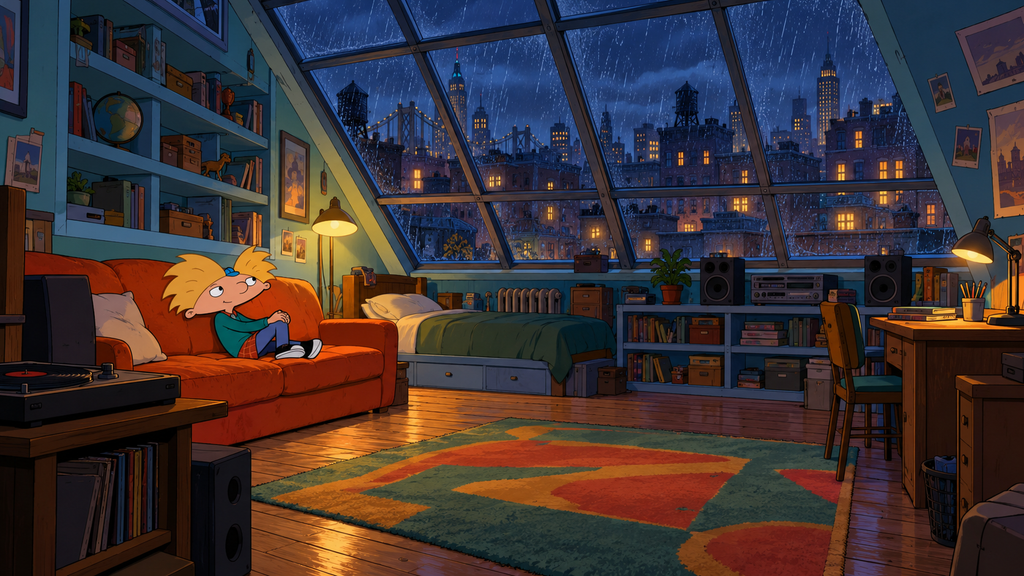
Arnold’s bedroom remains one of the greatest cartoon bedrooms ever designed.
Located in the attic of his grandparents’ Sunset Arms boarding house, the room had a glass ceiling, built-in shelves, a comfortable couch, a stereo system, and a view of the city skyline. It felt private without being lonely—a quiet place above the noise of Hillwood.
The rest of the boarding house was equally memorable. Every resident had a different personality, yet the building felt like one large, unconventional family home. Arnold’s attic was the peaceful center of that wonderfully chaotic world. The Sunset Arms is generally identified as being at 4040 Vine Street, while Arnold’s room occupies the attic. Hey Arnold!
Even today, his room looks like the perfect place to watch rain hit the glass roof while listening to music late at night.
2. SpongeBob’s Pineapple House — SpongeBob SquarePants
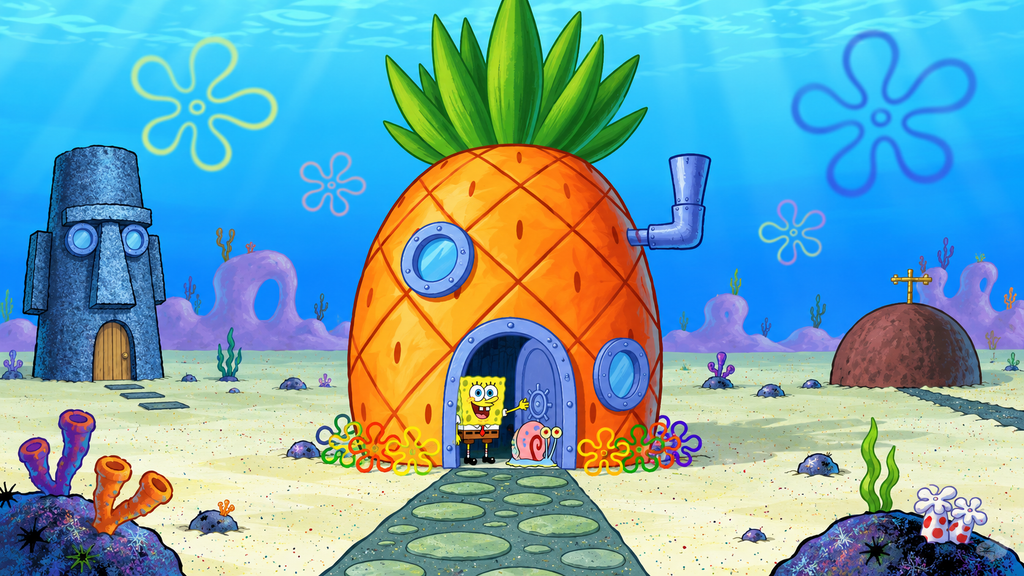
A giant pineapple should not work as a house—especially at the bottom of the ocean—but SpongeBob made it look surprisingly inviting.
The curved doors, bamboo furniture, foghorn alarm clock and enormous diving helmet television gave the interior its unmistakable personality. It was cheerful, unusual and perfectly suited to its owner.
Located at 124 Conch Street, the pineapple became so iconic that Nickelodeon inspired a real 1,500-square-foot Pineapple Villa at its Punta Cana resort. Nickelodeon Hotels & Resorts Punta Cana
Living next to Squidward might occasionally be uncomfortable, but having Patrick nearby and Bikini Bottom outside the window would make every day feel like an adventure.
3. Dexter’s House and Secret Laboratory — Dexter’s Laboratory
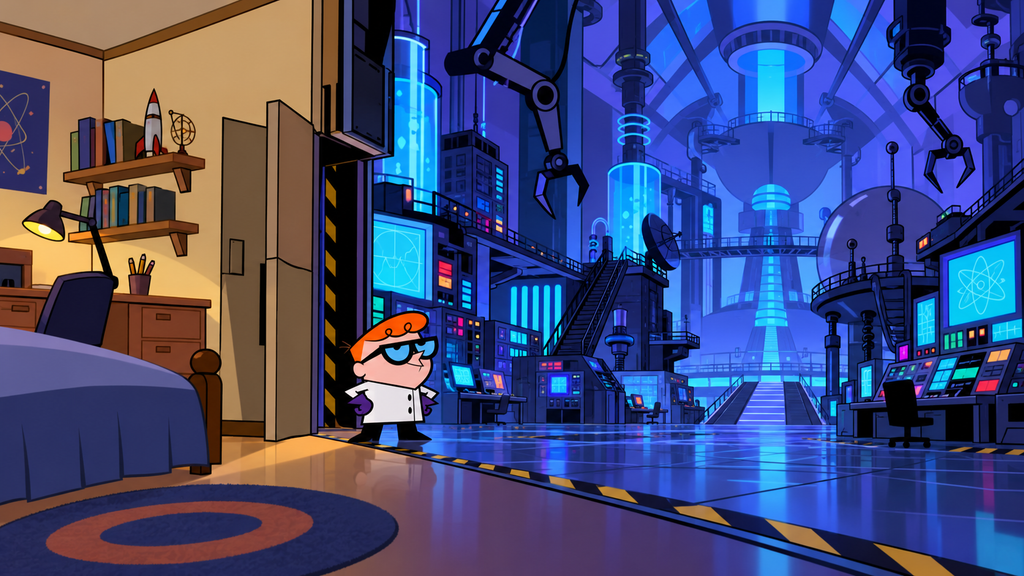
From the outside, Dexter’s home appeared to be an ordinary suburban house. Behind his bedroom bookshelf, however, was an enormous technological world filled with computers, robots, control panels and inventions.
That contrast made the laboratory fascinating. A child could finish breakfast, walk upstairs and secretly enter a facility more advanced than anything operated by the world’s governments.
Its size never made architectural sense, but that was part of the magic. The laboratory could contain almost anything the story required, from giant machines to rockets and interdimensional experiments.
The only serious disadvantage would be sharing it with Dee Dee, who could destroy an entire experiment by pressing one glowing button.
4. The Powerpuff Girls’ Home — The Powerpuff Girls
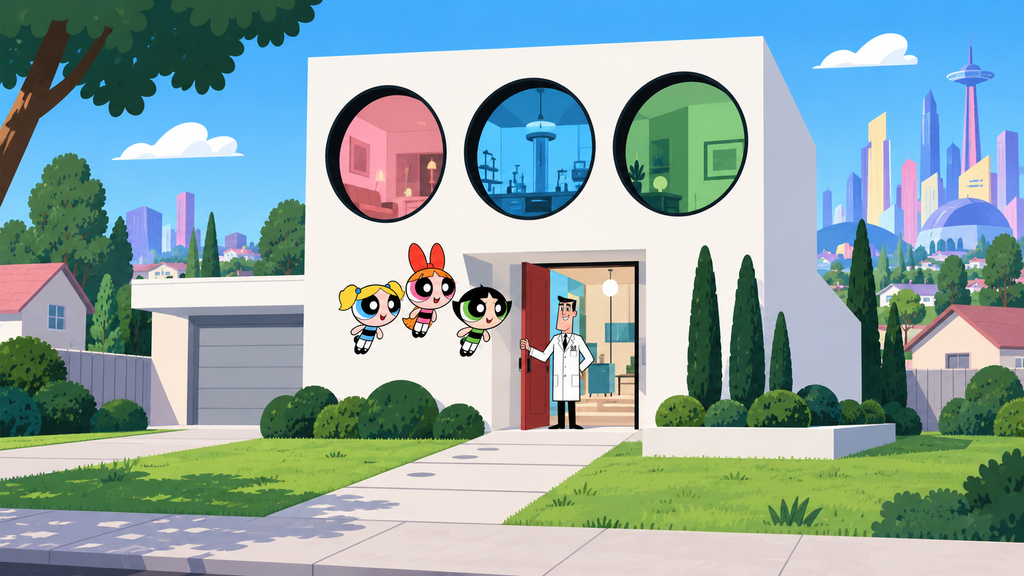
Professor Utonium’s white, cube-shaped house was one of the cleanest and most recognizable homes in Townsville.
Its circular windows, bright red door and minimalist design made it look simple from the street. Inside, however, it combined a loving family home with an advanced scientific laboratory.
The girls had their signature shared bedroom, while Professor Utonium had the equipment needed to create experiments—and occasionally cause a citywide disaster. The residence represented both sides of the show: ordinary family life and superhero chaos. Fandom
It was the kind of home where bedtime could be interrupted at any moment by a call from the mayor.
5. 742 Evergreen Terrace — The Simpsons
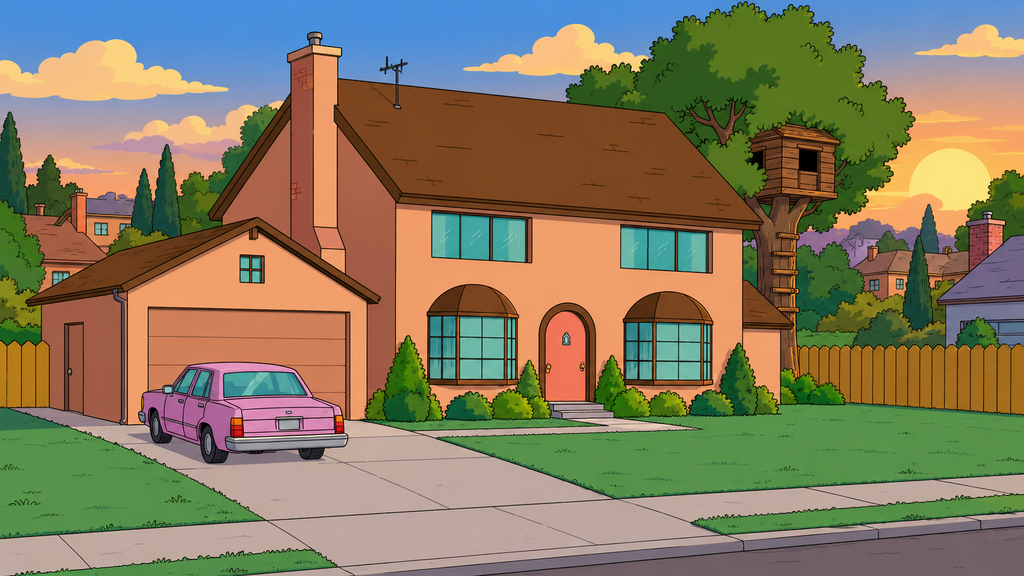
The Simpsons’ house was not futuristic or luxurious. That was precisely why it felt so familiar.
Its pink-orange exterior, brown couch, crooked wall pictures, busy kitchen and backyard treehouse made it resemble a real family home. Viewers saw birthday parties, arguments, holidays, disasters and thousands of quiet everyday moments unfold inside it.
The house is most consistently identified as 742 Evergreen Terrace. Its design became so famous that a full-sized promotional version was constructed in Henderson, Nevada, in 1997. Wikisimpsons, the Simpsons Wiki
It might require frequent repairs after Homer’s latest mistake, but sitting on that famous couch would still be worth it.
6. The Pickles Family Home — Rugrats
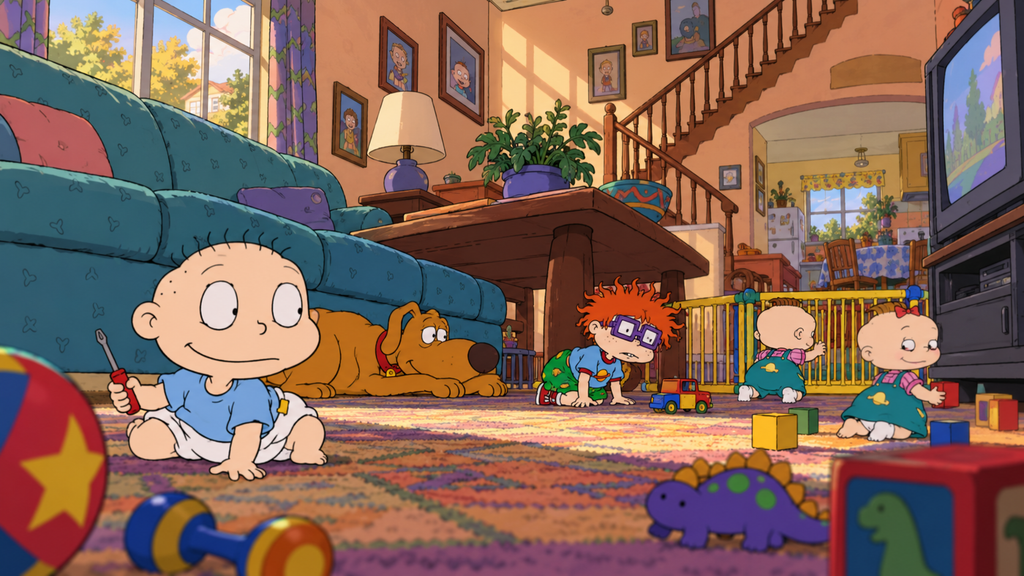
To adults, Tommy Pickles’ house was a typical suburban family home. To the babies, it was an enormous unexplored world.
The living room became a wilderness. The kitchen felt like dangerous territory. A staircase could become a mountain, while the backyard could contain an entire adventure.
Many of the original show’s stories began in or around the Pickles home, which housed Tommy, his parents, his brother Dil and the family dog, Spike. Nickelodeon Animation
The house itself was comfortable, but its real appeal came from seeing it through a child’s imagination. Ordinary furniture and household objects could transform into something mysterious, exciting or terrifying.
7. CatDog’s Fish-and-Bone House — CatDog
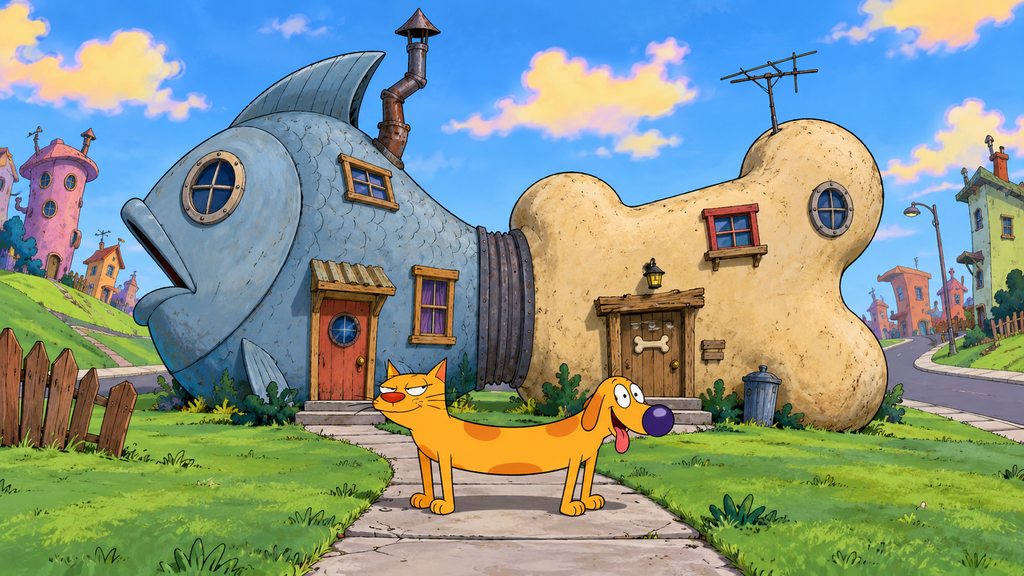
CatDog did not live in a normal building. Their home was designed to resemble a fish on Cat’s side and a bone on Dog’s side.
It was strange, colorful and perfectly represented the two completely different personalities forced to share one body. The interior included separate interests and decorations, but its unusual structure turned the house into an extension of the characters themselves.
The episode “House of CatDog” even centers on the bizarre half-fish, half-bone building being threatened with demolition. Fandom
It probably would not pass a real building inspection, but no other home in Nearburg had as much personality.
8. Snoopy’s Doghouse — Peanuts
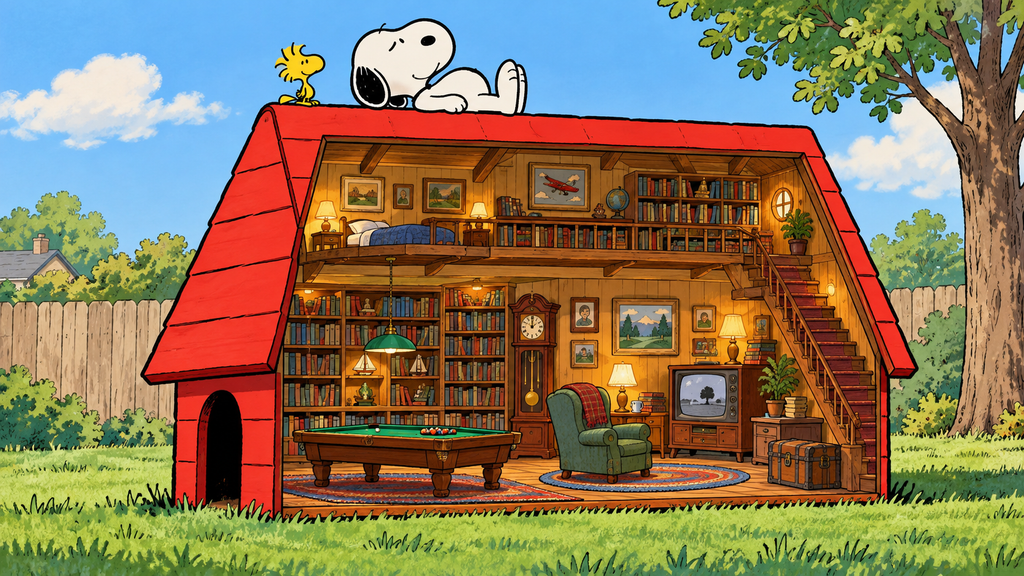
From the outside, Snoopy’s red doghouse looked tiny. In his imagination—and according to numerous comic-strip references—its interior appeared to hold far more than should physically fit inside.
Over the years, the doghouse was associated with items such as a television, a library, a pool table, a grandfather clock and valuable artwork. partypinching.com
Its mystery made it irresistible. Readers rarely needed to see the interior because imagining it was more entertaining than any official floor plan could be.
It was also an airplane, a writing retreat and the perfect place to sleep beneath the stars. Snoopy did not simply own a doghouse—he owned an entire private universe.
9. The Flintstone Family’s Stone-Age Home — The Flintstones
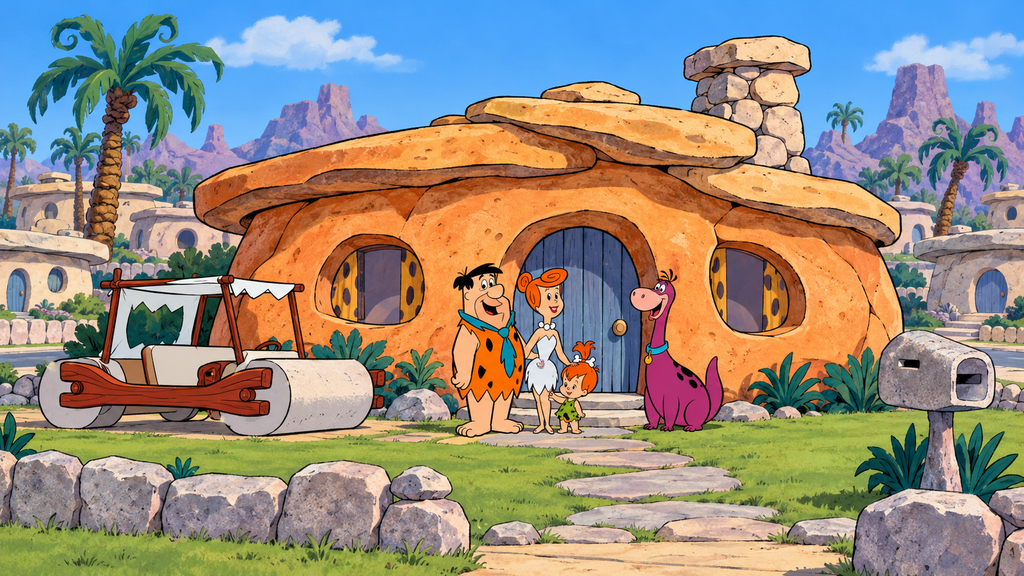
The Flintstones lived in a stone house filled with prehistoric versions of modern conveniences.
Household appliances were often animals performing everyday tasks, while stone furniture somehow appeared more comfortable than it had any right to be. The home blended suburban family life with imaginative Stone Age technology.
Bedrock itself was built around the joke of modern society existing in a prehistoric setting, and the Flintstone residence was its perfect example. Warner Bros. continues to present Bedrock as the home of the Flintstone and Rubble families. wbworldabudhabi.com
The stone beds might have taken some adjustment, but having Dino as a pet would make up for it.
10. The Jetsons’ Apartment — The Jetsons
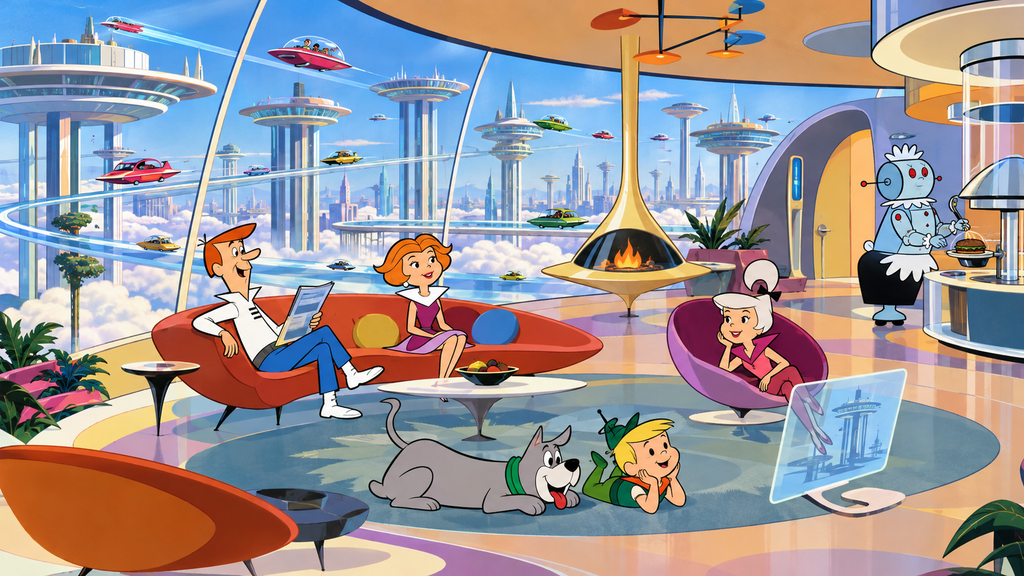
For children imagining the future, the Jetsons’ apartment offered almost everything: moving walkways, robotic assistance, video calls and machines capable of preparing meals instantly.
The family lived in the elevated Skypad Apartments above Orbit City, surrounded by flying vehicles and futuristic buildings. The design was reportedly influenced by the Space Needle, with buildings raised high above the ground. Fandom
Many of its futuristic ideas no longer seem impossible. Video calls, robotic cleaning devices and smart-home technology have become normal parts of modern life.
We may not have flying cars in every driveway, but the Jetsons’ home feels closer to reality than it once did.
More Than Cartoon Backgrounds
These homes stayed in our memories because they reflected the characters who lived inside them.
Arnold’s room felt calm and thoughtful. SpongeBob’s pineapple was cheerful and strange. Dexter’s laboratory represented unlimited curiosity, while the Simpsons’ house captured the imperfect comfort of family life.
As children, we wanted to enter these places because they made ordinary life feel bigger. A bedroom could become a private sanctuary. A suburban house could hide a laboratory. Even a small red doghouse could contain an entire world.
Which cartoon house would you choose to live in?



Post Comment