The Hidden Face Tom and Jerry Showed Only Once
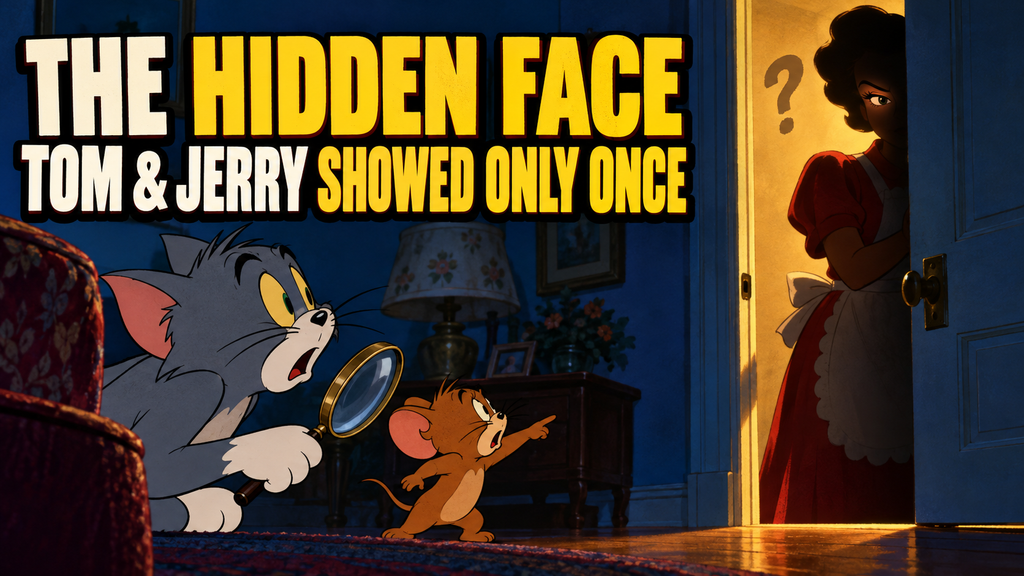
The Hidden Face Tom and Jerry Showed Only Once
For years, one of the most recognizable characters in Tom and Jerry was also one of its greatest visual mysteries.
Viewers heard her voice, watched her chase Tom through the house and immediately recognized her footsteps. Yet the camera almost always stopped at her waist, keeping her face outside the frame.
But in one classic episode, the animators briefly broke that rule.
For only a moment, the mysterious woman’s full face appeared on-screen—and many fans watched the scene without ever noticing it.
The Woman Whose Face Was Always Hidden
The character is commonly known as Mammy Two Shoes.
She appeared throughout the early Hanna-Barbera era of Tom and Jerry, beginning with the duo’s first theatrical short, Puss Gets the Boot, in 1940.
Most episodes showed only her legs, apron and slippers. That limited framing became one of the series’ most recognizable visual devices. Viewers rarely needed to see her face because her voice, movements and relationship with Tom immediately revealed who had entered the room.
She was originally voiced by actress Lillian Randolph, although she was not credited in the cartoons.
While she is frequently described as the household maid, the series was not always consistent about her role. In certain episodes, including the one that finally showed her face, the house appears to belong to her.
The Only Episode That Revealed Her Face
The hidden face appeared in the 1950 short Saturday Evening Puss.
The episode begins with Mammy preparing to leave for a Saturday-night bridge gathering. As soon as she is gone, Tom signals to his alley-cat friends that the house is available.
Butch, Topsy and Lightning arrive, and the cats turn the living room into a loud jazz party.
Jerry is trying to sleep, but the music makes that impossible. He attempts to stop the party by interfering with the record player, piano and the cats themselves. When none of his plans work, Jerry reaches the telephone and calls Mammy.
That telephone call creates the episode’s most easily missed moment.
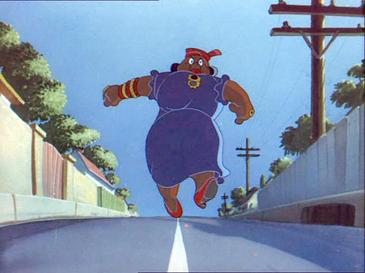
After learning what is happening inside her house, Mammy rushes home. During the sequence, the camera briefly shows her from the front—and her complete face becomes visible.
It happens quickly enough that someone watching casually could miss it entirely.
Across her many appearances in the original shorts, this remains the only Tom and Jerry cartoon that clearly shows her face.
Why Did the Series Keep Her Face Hidden?
There is no confirmed secret storyline explaining why the character’s face remained outside the frame.
The framing worked as a visual comedy technique. By presenting the action from the lower perspective of Tom and Jerry, adult humans appeared enormous compared with the two main characters.
Keeping her face outside the image also made her entrance feel more threatening. Tom often recognized the sound of her footsteps before she appeared, knowing that he was about to be blamed for whatever destruction had occurred.
The decision eventually became part of the character’s identity. Audiences could recognize her without needing to see her entire body.
That is what makes the brief reveal in Saturday Evening Puss feel so unusual.
Some Viewers Saw a Completely Different Version
The mystery becomes even more complicated because not every viewer watched the same version of the episode.
During the 1960s, several classic Tom and Jerry shorts were modified for television because of concerns surrounding Mammy Two Shoes and the racial stereotypes associated with her portrayal.
A reanimated version of Saturday Evening Puss was produced in 1966. In that version, Mammy was replaced by a thin white teenage girl voiced by June Foray.
Parts of the story were also changed. Instead of attending a bridge club, the replacement character goes out dancing with her boyfriend.
This means that some people who remember the episode may remember an entirely different woman returning to the house. Depending on the country, television network, VHS release or DVD collection, audiences encountered different animation and voice tracks.
The character’s original appearance was later restored in some releases, while certain versions used newly recorded dialogue by actress Thea Vidale to remove the heavily stereotyped dialect.
Why the Character Became Controversial
Mammy Two Shoes reflects racial stereotypes that were common in Hollywood animation during the 1940s and early 1950s.
Her appearance, occupation and original dialogue were based on the “mammy” stereotype, a portrayal of Black women now widely recognized as offensive and historically harmful.
Because of this, different distributors responded in different ways. Some broadcasts changed her voice, others replaced her through reanimation, and certain episodes were removed from circulation entirely.
More recent physical releases have sometimes preserved the original cartoons while including warnings that explain their historical context.
The changes created an unusual situation: multiple generations grew up watching Tom and Jerry, but they did not necessarily see the same version of the cartoons.
A Split-Second Piece of Animation History
The face reveal in Saturday Evening Puss was not part of a hidden conspiracy or a secret storyline.
It was simply a brief moment in a cartoon released in 1950.
Yet decades of edits, replacement animation and different television versions transformed that moment into one of the most fascinating visual details in Tom and Jerry history.
Many viewers spent years hearing the character’s voice and watching her chase Tom without realizing that her face had appeared at all.
It was visible for only a moment—but once you know where to look, one of the show’s oldest mysteries finally has a face.




Post Comment