Why Courage Was Never Really a Coward
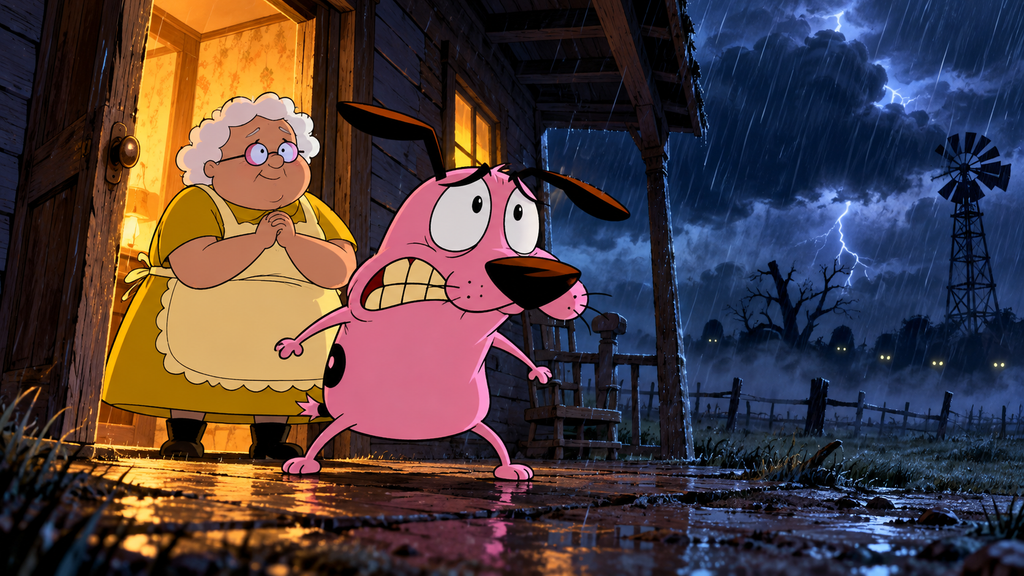
Courage screamed. He panicked. He hid under furniture and imagined the worst possible outcome.
But when Muriel was in danger, he always came back.
That is what made Courage the Cowardly Dog more than a strange cartoon filled with monsters. Beneath the horror, comedy, and unsettling imagery was a surprisingly meaningful story about fear, loyalty, and love.
Despite his name, Courage was never truly a coward.
Being Afraid Is Not the Same as Being Cowardly
A coward runs away and leaves others behind. Courage often tried to escape, but he never stayed gone when someone needed him.
He was frightened because the danger around him was real. The farmhouse in the middle of Nowhere was constantly visited by monsters, aliens, ghosts, criminals, and creatures that seemed to come from nightmares.
Anyone would have been terrified.
The important part was not that Courage felt fear. It was that he continued moving while he was afraid.
True courage is not the absence of fear. It is choosing to act despite it.
He Repeatedly Faced Danger Alone
Muriel and Eustace rarely understood what was happening around them.
Muriel was often captured, transformed, hypnotized, or placed in danger without realizing it. Eustace usually ignored Courage’s warnings, mocked him, or made the situation worse.
That left Courage to solve almost every problem by himself.
He researched strange creatures on his computer, followed villains into dangerous places, invented plans, and confronted enemies much larger and stronger than he was.
Courage had no special powers. He was simply a small dog who refused to abandon his family.
His Love for Muriel Was Stronger Than His Fear
Muriel gave Courage something he had lost as a puppy: a safe home and someone who loved him.
That relationship explains why he was willing to risk everything for her.
Courage did not save Muriel because he wanted praise. In many episodes, she never fully understood what he had done. He protected her because she was his family.
Even when he was shaking, screaming, or expecting disaster, his love for Muriel always pulled him forward.
His fear told him to hide.
His heart told him to go back.
His Past Makes His Bravery Even More Powerful
In “Remembrance of Courage Past,” we learn that Courage lost his parents after a cruel veterinarian sent them into space.
The experience left him alone and helpless until Muriel found and adopted him.
This changes the way we understand Courage.
He was not frightened for no reason. He had already experienced loss, abandonment, and danger as a puppy. Every new threat could have reminded him that the people he loved might disappear again.
Yet Courage refused to let his past stop him from protecting his new family.
He could not save his parents when he was young, but he repeatedly fought to save Muriel and even Eustace.
He Often Chose Compassion Over Violence
Courage did not always defeat his enemies by attacking them.
He frequently tried to understand what they wanted. Some of the creatures that initially appeared frightening were lonely, misunderstood, or suffering themselves.
In “The Mask,” Courage looks beyond Kitty’s hatred of dogs and discovers that her friend Bunny is in danger. Instead of treating Kitty as a simple enemy, he understands her pain and helps reunite the two friends.
That required a different kind of bravery—the willingness to show empathy toward someone who had frightened and mistreated him.
Courage’s greatest strength was never physical power. It was his ability to care.
He Even Protected Eustace
Eustace constantly insulted Courage and frightened him with his mask.
Courage would have had plenty of reasons to leave him behind. Instead, he often tried to save Eustace too.
That does not excuse the way Eustace treated him. It reveals something important about Courage’s character.
His kindness was not dependent on whether someone deserved it.
He helped because helping others was part of who he was.
Courage Was Never Perfect—and That Was the Point
In the final episode, “Perfect,” Courage is made to feel that everything he does is wrong. He struggles under the pressure of trying to become a “perfect” dog.
But perfection was never what made Courage heroic.
He made mistakes. He became overwhelmed. His plans sometimes failed, and fear often controlled his first reaction.
Still, he kept trying.
The episode’s message feels even more meaningful when viewed as the conclusion of the entire series: Courage did not need to stop being afraid or become perfect to be worthy of love.
He was already enough.
Why Adults Understand Courage Differently
As children, many of us laughed at his screams and strange transformations.
As adults, we recognize something more personal.
Courage represents what it feels like to face a world that can be unpredictable and frightening. Sometimes we do not feel ready. Sometimes we panic. Sometimes we want to hide.
But bravery does not always look confident.
Sometimes bravery is a frightened little dog returning to the farmhouse because the person he loves is still inside.
Courage Was the Bravest Character in Nowhere
The word “cowardly” in the title was always ironic.
Courage experienced fear more intensely than anyone around him, yet he was usually the only character willing to confront the danger.
He did not wait until he felt fearless.
He acted while trembling.
And that may be the most honest form of courage there is.

Post Comment